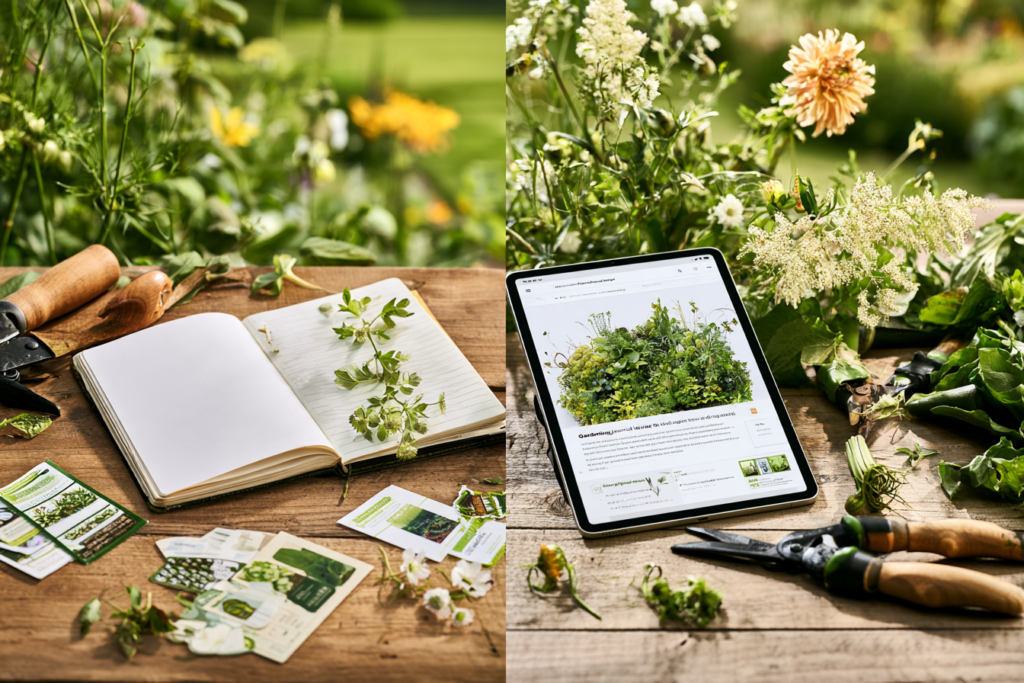
If you enjoy gardening, keeping records can make a huge difference to your success. Whether you are tracking planting dates, monitoring flower displays, recording harvests, or documenting garden improvements, having a reliable way to store information helps you learn from each growing season.
Many gardeners start with a traditional notebook, while others prefer a digital Gardening Journal. Both options can be useful, but each offers different advantages. Understanding the strengths and limitations of each can help you decide which solution is right for you.
Why Keep Garden Records?
Before comparing the two options, it is worth remembering why garden record keeping is so valuable.
Good records can help you:
- Remember planting dates
- Track plant performance
- Monitor flowering and harvesting times
- Record gardening successes and failures
- Plan future gardening projects
- Improve results year after year
The more information you save, the more useful your records become.
Traditional Garden Notebook
A notebook has been the gardener’s companion for generations.
Many gardeners enjoy the simplicity of writing observations by hand and carrying a notebook around the garden while they work.
Advantages of a Garden Notebook
Simple and Familiar
A notebook requires no technology, internet connection, or learning curve.
Simply open it and start writing.
Quick Notes Anywhere
You can jot down observations immediately while planting, pruning, or harvesting.
Personal Touch
Many gardeners enjoy creating handwritten records, sketches, and garden plans that feel unique and personal.
No Batteries Required
A notebook is always ready to use without needing charging or internet access.
Disadvantages of a Garden Notebook
Difficult to Search
Finding information from several years ago can be time-consuming.
You may need to flip through dozens of pages to locate a specific note.
Limited Photo Storage
While you can print and attach photographs, this can quickly become expensive and cumbersome.
Risk of Damage
Paper records can be lost through damage, accidents, weather exposure, or simple misplacement.
Limited Organisation
As records accumulate, keeping everything organised can become challenging.
Online Gardening Journal
A digital Gardening Journal combines traditional record keeping with modern technology.
It allows gardeners to store notes, photographs, plant records, and observations in a single accessible location.
Advantages of an Online Gardening Journal
Store Notes and Photos Together
One of the biggest benefits of a Gardening Journal is the ability to combine written records with photographs.
You can:
- Upload images of plants
- Track growth over time
- Compare seasonal changes
- Record garden transformations
Photos provide valuable context that is difficult to achieve with a paper notebook.
Easy Search and Organisation
Need to find out when you planted your dahlias three years ago?
A digital Gardening Journal allows you to locate entries quickly and easily.
Instead of searching through pages of handwritten notes, your records are organised and accessible whenever you need them.
Access Anywhere
An online Gardening Journal can be accessed from:
- Desktop computers
- Laptops
- Tablets
- Smartphones
Whether you are in the garden, at a garden centre, or planning next season’s planting, your records are always available.
Better Long-Term Record Keeping
Digital records make it easy to build a complete gardening history over many years.
You can store:
- Plant information
- Care notes
- Planting dates
- Harvest records
- Garden projects
- Seasonal observations
Everything remains together in one organised location.
Create a Visual Gardening History
One of the most enjoyable aspects of an online Gardening Journal is seeing how your garden evolves.
Photographs taken over multiple seasons can reveal:
- Garden maturity
- Plant growth
- Landscape improvements
- Successful planting combinations
Many gardeners find this visual history both practical and rewarding.
Disadvantages of an Online Gardening Journal
Requires a Device
You will need access to a phone, tablet, or computer to enter and review information.
Learning a New System
Some gardeners initially prefer pen and paper and may need time to become comfortable with a digital alternative.
However, most modern Gardening Journal platforms are designed to be simple and intuitive.
Side-by-Side Comparison
Garden Notebook
Best for:
- Handwritten note-taking
- Simple record keeping
- Garden sketches
- Gardeners who prefer paper records
Gardening Journal
Best for:
- Long-term garden record keeping
- Photo storage
- Plant tracking
- Easy organisation
- Access across multiple devices
- Building a searchable gardening database
Which Is Better?
The answer depends on how you garden.
If you simply want a place to make occasional notes, a notebook may be perfectly adequate.
However, if you want to create a complete record of your garden, track plants over many seasons, organise photographs, and access your information from anywhere, a Gardening Journal offers significant advantages.
As your garden grows and your records become more valuable, having everything organised in one searchable location can save time and improve your gardening decisions.
The Best of Both Worlds
Some gardeners choose to use both methods.
They carry a notebook while working outdoors and later transfer important observations into their Gardening Journal, creating a permanent and organised digital record.
This approach combines the convenience of handwritten notes with the powerful organisation and storage capabilities of an online Gardening Journal.
Start Your Free Gardening Journal Today
Whether you are growing vegetables, flowers, shrubs, fruit, or houseplants, keeping accurate records is one of the best ways to improve your gardening success.
A Gardening Journal helps you organise notes, upload photographs, track plant performance, and create a valuable history of your garden that grows more useful every year.
Start your free Gardening Journal today and discover how much easier garden record keeping can be.