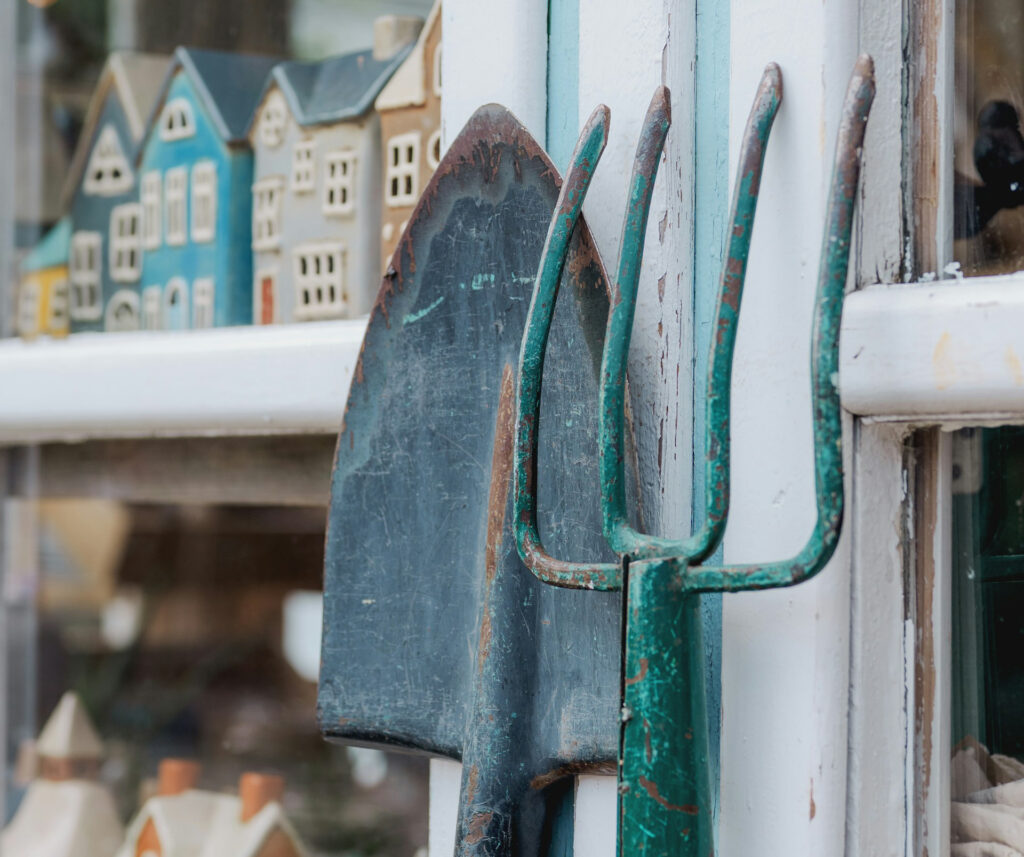
If you’re building a gardening toolkit, two of the most important hand tools you’ll encounter are the garden fork and the garden spade. While they may look similar at first glance, each serves a very different purpose. Choosing the right tool can make gardening tasks easier, faster, and more effective while reducing strain on your body.
In this guide, we’ll compare garden forks and garden spades, explain their main uses, and help you decide which tool deserves a place in your shed.
What Is a Garden Fork?
A garden fork features four sturdy metal tines attached to a long handle. Designed to penetrate and loosen soil, it is an essential tool for digging, aerating, and lifting materials around the garden.
The tines are typically made from stainless steel or carbon steel and can easily break through compacted ground where a spade might struggle.
Common Uses for a Garden Fork
A garden fork is particularly useful for:
- Breaking up compacted or clay-heavy soil
- Aerating garden beds
- Turning compost heaps
- Lifting potatoes and root vegetables
- Mixing organic matter into soil
- Removing weeds with deep roots
- Loosening soil before planting
Because the tines create less resistance than a solid blade, a fork often requires less effort when working in dense or rocky soil.
What Is a Garden Spade?
A garden spade is a flat-bladed digging tool designed for cutting, shaping, and moving soil. It typically features a rectangular blade with either a straight or slightly rounded edge.
Spades are prized for their precision and are often used when neat edges and clean cuts are required.
Common Uses for a Garden Spade
Garden spades are ideal for:
- Digging planting holes
- Creating garden borders
- Edging lawns
- Transplanting shrubs and perennials
- Moving soil, mulch, and compost
- Dividing established plants
- Cutting through roots
The flat blade allows gardeners to make clean, straight cuts, making a spade invaluable for landscaping and bed preparation.
Garden Fork vs Garden Spade: Key Differences
Although both tools are designed for digging and soil work, their strengths differ significantly.
Soil Penetration
When dealing with hard, compacted, or clay soil, a garden fork is usually the better choice. The pointed tines penetrate dense ground more easily than a flat blade.
A spade can struggle in heavily compacted soil, often requiring greater force to break through the surface.
Digging and Soil Movement
For moving large amounts of soil from one area to another, a spade is generally more efficient. The broad blade acts like a scoop, allowing gardeners to lift and transfer material quickly.
A fork can move soil, but it will not carry as much material with each lift.
Aeration
Garden forks excel at aerating soil. By creating small openings throughout the ground, they allow air, moisture, and nutrients to reach plant roots more effectively.
A spade, on the other hand, tends to slice through soil rather than loosen it.
Harvesting Crops
If you’re harvesting potatoes, carrots, parsnips, or other root crops, a garden fork is often the safest option. The tines reduce the risk of accidentally slicing through vegetables hidden underground.
Precision Work
For creating tidy borders, sharp lawn edges, and accurately shaped planting beds, a garden spade is difficult to beat. Its straight blade provides far more control than a fork.
Which Tool Is Best for Beginners?
For new gardeners, both tools offer significant value, but the best choice depends on the type of gardening tasks you’ll perform most often.
Choose a garden fork if you:
- Have heavy clay soil
- Need to loosen compacted ground
- Grow vegetables regularly
- Make compost
- Want to improve soil structure
Choose a garden spade if you:
- Create flower beds and borders
- Plant shrubs and trees
- Edge lawns frequently
- Move soil and mulch
- Focus on landscaping projects
If your budget allows, owning both tools provides the greatest flexibility and covers almost every common gardening task.
What Features Should You Look For?
When buying either tool, pay attention to quality and comfort.
Look for:
- Stainless steel heads for rust resistance
- Forged construction for extra durability
- FSC-certified ash or hardwood handles
- Ergonomic D-shaped handles for improved grip
- Comfortable shaft length suited to your height
Investing in a well-made tool can save money in the long term, as quality garden forks and spades often last for many years with proper care.
Final Thoughts
The debate between a garden fork and a garden spade isn’t really about which tool is better. Instead, it’s about which tool is best suited to the task at hand. A garden fork shines when loosening, aerating, and improving soil, while a garden spade excels at digging, edging, and moving material.
For most gardeners, the ideal solution is to own both. Together, they form the foundation of an effective gardening toolkit and make everything from planting vegetables to creating beautiful borders far easier and more efficient.