A well-planted pond is one of the most attractive features in any garden. Aquatic plants do far more than add colour and texture; they help maintain water quality, support wildlife, reduce algae growth, and create a balanced ecosystem. Choosing the right aquatic plants for your pond can improve water clarity while transforming it into a beautiful focal point that can be enjoyed throughout the year.
Why Aquatic Plants Matter in Pond Health
Aquatic plants play a vital role in maintaining a healthy pond environment. Many species absorb excess nutrients from the water, helping to prevent the conditions that encourage algae blooms. By competing with algae for nutrients, pond plants naturally contribute to clearer water.
In addition, aquatic plants provide shelter for fish, frogs, insects, and other beneficial wildlife. They also help regulate water temperature by providing shade, which can reduce evaporation during hot weather and create a more stable aquatic environment.
Floating Plants for Natural Filtration
Floating plants are often the first choice for gardeners looking to improve pond clarity. These plants drift freely on the surface and help reduce sunlight penetration, limiting algae growth.
Popular floating plants include:
- Water Lettuce (Pistia stratiotes)
- Frogbit (Hydrocharis morsus-ranae)
- Water Hyacinth (Eichhornia crassipes, where permitted)
Because their roots hang directly in the water, floating plants absorb large amounts of nutrients, acting as natural filters. Their attractive foliage also adds visual interest and softens the appearance of the pond surface.
Oxygenating Plants for Crystal Clear Water
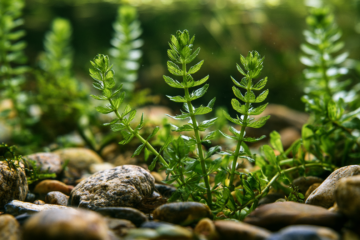
Oxygenating plants are essential for healthy ponds. These underwater species release oxygen into the water during daylight hours, supporting fish and beneficial microorganisms.
Excellent oxygenating plants include:
- Hornwort (Ceratophyllum demersum)
- Water Milfoil (Myriophyllum spicatum)
- Curled Pondweed (Potamogeton crispus)
These plants help break down organic waste and improve the biological balance within the pond. A good rule of thumb is to include several bunches of oxygenating plants for every square metre of pond surface area.
Marginal Plants for Structure and Colour
Marginal plants grow in the shallow edges of ponds, where their roots remain submerged while their foliage rises above the water. They create a natural transition between the pond and the surrounding garden.
Some excellent choices include:
- Yellow Flag Iris
- Marsh Marigold
- Pickerel Weed
- Water Mint
These plants add height, texture, and seasonal flowers while helping stabilise pond edges. Many also attract pollinators such as bees and butterflies, increasing biodiversity in your garden.
Water Lilies: The Ultimate Pond Centrepiece
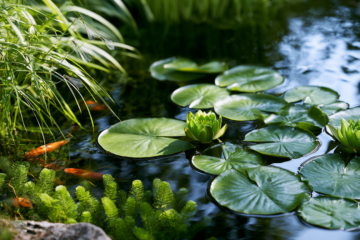
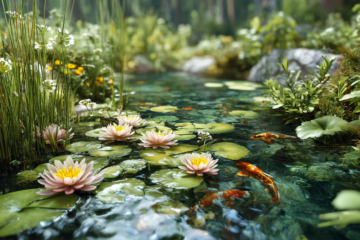
No discussion of aquatic plants would be complete without mentioning water lilies. Their elegant blooms and floating leaves provide beauty while serving a practical purpose.
Water lily pads shade the pond surface, reducing sunlight that encourages algae growth. This helps maintain cooler water temperatures and improves overall pond health.
For best results, select a variety suited to your pond size. Dwarf water lilies work well in small ponds, while larger varieties can create dramatic displays in spacious water gardens.
Creating a Balanced Planting Scheme
The most attractive and effective ponds combine different types of aquatic plants. A balanced planting scheme typically includes:
- Floating plants for shade and nutrient absorption
- Oxygenating plants for water quality
- Marginal plants for structure and habitat
- Water lilies for beauty and additional shade
Aim to cover approximately 50 to 70 percent of the pond surface with plant growth. This level of coverage helps control algae while leaving enough open water for fish and wildlife.
Pond Maintenance Tips
Even the best aquatic plants require occasional care. Remove dead foliage regularly to prevent excess organic matter from decomposing in the water. Divide overcrowded plants every few years to maintain healthy growth and prevent them from dominating the pond.
During dry periods, monitor water levels and top up the pond when necessary. Consistent watering of surrounding garden plants and careful pond management will help maintain a thriving aquatic environment.
Final Thoughts
Choosing the right aquatic plants for clarity and beauty is one of the most effective ways to create a healthy, attractive pond. By combining floating plants, oxygenators, marginal species, and water lilies, you can achieve cleaner water, support local wildlife, and enjoy stunning visual displays throughout the year. With thoughtful plant selection and regular maintenance, your pond can become a vibrant centrepiece that enhances your garden for many seasons to come.